
03_Built on Trust
Trust speeds up the flow. The lack of it slows it down.
BUSINESS & LEAN MANAGEMENT
Waleed Radwan
1/6/20264 min read
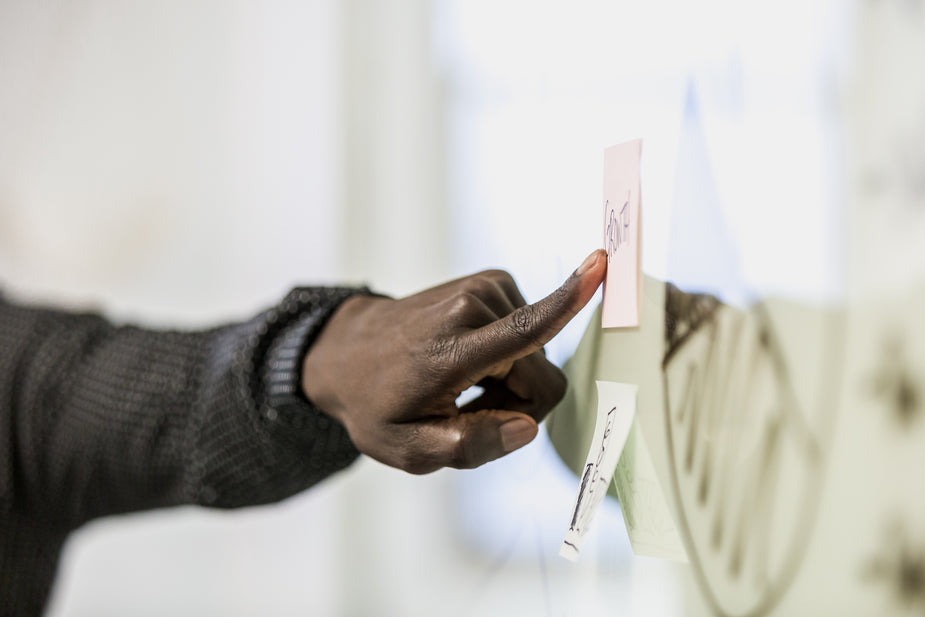
The meeting room slowly filled up as other team members arrived.
But the tension was already thick.
Today’s meeting was expected to be… messy.
Targets already missed.
Deadlines slipping.
Fingers ready to point.
Rocky cautiously watched Sage, wondering what's the old man up to, this time?
Sage sat down clasped his hands together, interlocking his fingers, and leaned back with his chair, ready to actively listen.
The meeting began, and as expected, chaos erupted.
Dashley interrupted everyone.
Deckson defended his slides decks like they were his children.
Rocky blamed procurement.
Procurement blamed operations.
Operations blamed “the system.”
Voices rose.
Half-way through this long meeting, the team decided to take a quick break. It was a coffee break for coffee-lovers, and a bio break for the excessive-water-and-tea drinkers who already drank too much!
When everyone was out of the room, Rocky quickly grabbed the seat next to Sage.
Rocky whispered sharply, “Why so quiet today, Mr. Sage?!”
Sage paused, remembering that he wants to mentor Rocky, and said, “In tough moments, the real leaders are the ones who stay centered. Not silent. Centered.”
Rocky frowned. “Meaning?”
Sage smiled. “Meaning: when everyone else reacts and get defensive, you take a step back.”
He paused. Took a deep breath.
“Remember ….when we talked about Compassionate Leadership. The authors mentioned ‘wise pauses’ — the ability to slow down your mind when the room speeds up. And no, it’s not meditation! It’s mastery.”
Rocky nodded slowly.
Sage added, “And in the book : The Power of Small, they say that a single calm voice can shift the emotional temperature of an entire room. So….let's try to do that, huh?”
Today, Sage seemed calm. Maybe too calm.
The meeting started again after the break.
And this time Sage started off the talk. Finally !!!
"Guys, before we start, did you notice what's written over here", pointing at the quotes on the flipchart.
“A kind word can do what a policy never will"
“So…….I'm not here to preach about kindness. And I'm definitely not giving YOU guys any kind words today! You don't even deserve it ! ", he said with a laugh, while everyone giggled lightly. "But as kindness opens the door to people..… trust is what keeps people walking through it.”
Now he got everyone baffled!
They started thinking he went totally off-track. But nevertheless, they were eager to listen.
He continued.
"If we can't trust each other to do the job correctly, then we keep going round in circles!"
"Guys" , he continued.
"We spent an hour in this meeting blaming procurement and operations, and we ended up now blaming the supplier.
Let me tell you how I see it.
I see the problem is really with us as a team. We're not working together, we're working against each other."
He paused.
"Remember Stephen Covey's quote-poster in the first floor corridor? It is says “Trust is the glue of life.”
“You know what that means? Trust is the invisible layer that binds the organization together to work in one direction. Without it we fall apart, and we're in big mess…. Like we are now! We trust our people to do their part and we trust the processes we designed. Trust isn’t a soft skill — it’s an economic driver. High trust speeds everything up. Low trust slows everything down.”
Simon Sinek said : A team is not a group of people who work together. A team is a group of people who trust each other.”
Why? Because when trust is low, every decision requires approval. Every task needs verification. Every conversation becomes defensive.”
He pointed at the whiteboard filled with arrows, loops, and red circles that were discussed before the break.
“Look at that! We’ve built a process to compensate for the absence of trust."
He allowed his words to sink in.
Then continued.
"Let me tell you two quick stories, then we dive back into the issue again.”
"First our favorite supplier, Tyson-Co … was actually one of our worst.
A few years ago, those of you who were here may remember, we faced a major operations crisis. A key supplier kept missing deadlines. Everyone wanted to terminate the contract.
Myself and the team visited their plant,” Sage paused. “Not to threaten them. To understand them.”
"We discovered the supplier had outdated equipment and a cash‑flow issue. Instead of punishing them, we offered a small advance payment and better payment terms".
Rocky interrupted, “You trusted them? After all the delays?”
Sage nodded. “Trust is a risk. But so is distrust.”
Rocky liked that statement!
"The supplier not only recovered," Sage added, "They became the company’s most reliable partner for the next seven years. And the issue was solved faster than we could have done it.
I was not surprised to know that a Harvard Business Review article revealed that companies with high‑trust relationships outperform low‑trust competitors by up to 300%.
He paused for a few seconds, and continued.
"Secondly….. our Junior Accountant"
Sage continued, “Remember Omar? The quiet junior accountant who barely spoke in meetings?”
Rocky nodded.
“He once messed-up in a report. Everyone expected me to haunt him after that, especially while working in one of our mega projects. Instead, I told him, ‘I trust you. Fix it your way.’”
“And he did?” Dashley asked.
“More than that,” Sage replied. “He became one of our top performers, and he came up with a tool to error-proof all reports from him and his colleagues."
Google’s Project Aristotle about psychological safety said that the belief that you won’t be punished for mistakes — is the #1 predictor of high‑performing teams. Believe me, trust creates that safety.”
Rocky leaned back, absorbing it.
It's true, he thought, but risky.
Sage continued, “Don't get me wrong, guys, trust doesn’t mean ignoring problems. It means believing that people want to do good work — and giving them the space to prove it.”
He paused.
"So let's get back to what we discussed before the break, but this time, let's come up with actions for both supplier and procurement, but trusting that they will solve the issue, without having us solving it for them. The action is "come up with the appropriate solution to achieve X, Y and Z….. And not the details of what X, Y and Z are. C'mon, we can't solve the world's problem in this meeting".
The team calmed down. Absorbing the words. Half-convinced, but ready.
Photo by Matthew Henry from Burst
LET'S CONNECT
Newsletter
waleed.radwan@zedseven.org
+971-58822-4771
© 2024. All rights reserved.
JOIN the COMMUNITY
JOIN the MOVEMENT !