
05_The Feedback Gap: Why We Can’t Keep Avoiding Hard Conversations
Allowing for critisicm to avoid losses.
BUSINESS & LEAN MANAGEMENT
Waleed Radwan
1/20/20264 min read
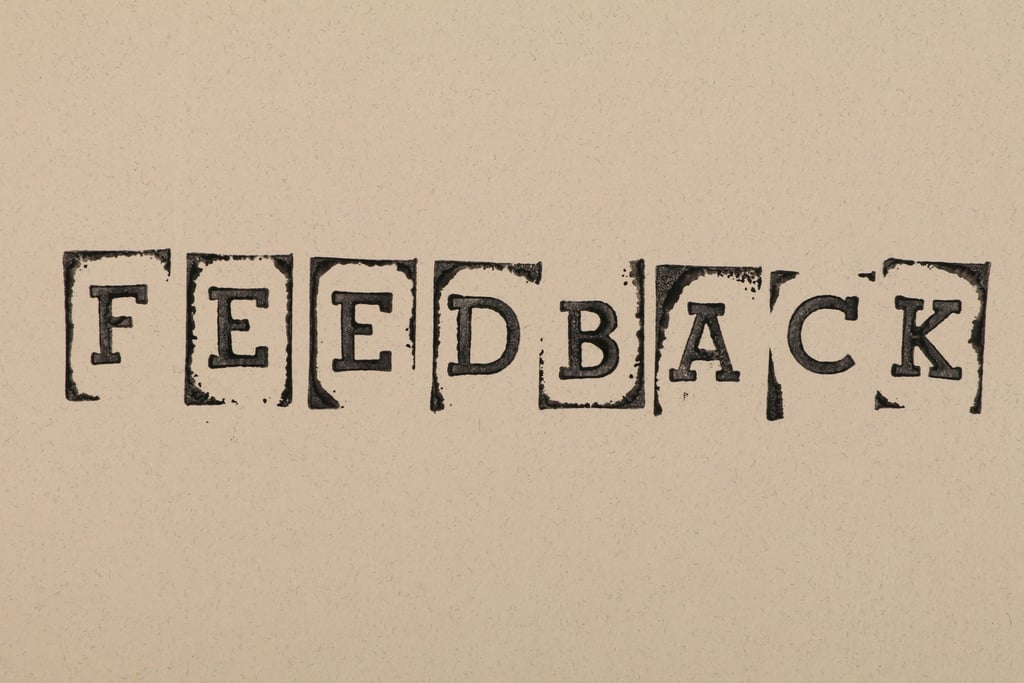
The day started with an unusual request.
Sage walked into the meeting room and placed a stack of blank cards on the table.
"Today's exercise is simple," he said calmly. "Each of you will write one piece of honest feedback for someone in this room. Something you've been avoiding saying."
The room froze for a few seconds.
Mr. Dashley immediately checked his phone. "Oh, I have a call in five minutes—"
"No, you don't," Sage interrupted gently.
Mr. NoNo crossed his arms, then raised one hand to scrape his beard, as if searching for a reason to disagree. "Is this a team-building thing, or what? Why start now anyway? We've never done this before."
Sage smiled. "Exactly. Because we’ve never done it, that’s why we really need it now."
Rocky leaned forward, intrigued. This was the "test" Sage had hinted at previously.
Sage continued. “And by they way, it has to start here first, with the people in this room. If we can’t challenge each other and safely give honest feedback, then how to we expect junior employees to safely criticize their leaders?”
It seems no one liked the idea. But they knew it’s sad but true.
"Last week, we talked about ego. Remember?”, Sage paused for a few seconds, “Ego thrives in silence. When good people avoid hard conversations, dysfunction becomes the norm. And I guess…. I guess you can all sense that already."
He paused again.
"Seriously, guys. Let me share something with you. You know I spend my weekends reading. So I came across this. Now, the author Kim Scott in her book Radical Candor, calls this Ruinous Empathy. It's when you care about someone personally, but you fail to challenge them directly. You think you're being kind. Actually, you're being cowardly."
The room shifted uncomfortably.
"And the cost?" Sage asked. "Let me tell you two stories."
First, in a health technology company named Theranos, junior lab staff raised repeated concerns about test accuracy and data handling — concerns that were ignored until regulators intervened and the company collapsed due to legal issues and fraud. This could have been avoided if silence was not the preferred norm, and if leaders allowed for others to speak.”.
Secondly, at Uber, a software engineer’s public account of ignored complaints exposed a culture where honest feedback about peers and managers was routinely dismissed. This eventually caused a scandal forcing a change in leadership, all because when employees did speak up, other managers pushed back rather than listen”.
“Think about these two cases”
By the way, in both cases employees WANTED to challenge. They were not avoiding it. But it was management that didn’t allow it. That’s why it has to start with us. Losses can be huge.
Sage leaned in. "It’s really because the culture punished bad news, isn’t it? Feedback was seen as disloyalty. So people stayed quiet."
"By the time leadership realizes this gap, companies face enormous losses. It doesn’t have to be legal issues, or a complete restructure…. let’s assume these are worst case scenarios. But let’s admit…there ARE losses, eventually. Not because organizations lack talent. Rather because they lack honest conversations. They lack the safe spaces that their teams need."
The room went silent.
Sage straightened up.
"Human feedback is human. It requires courage. It requires psychological safety. And most organizations are terrible at it. It’s to speak up and allow others to speak up, and then take them seriously"
He pointed at the blank cards.
"Just before we go back to our cards ..another book named Thanks for the Feedback says that 70% of employees say they avoid giving honest feedback because they fear damaging the relationship."
"But here's the truth: the relationship is already damaged. You're just pretending it's not."
Mr. Remix shifted in his seat. He knew this was about him.
Sage continued. "Patrick Lencioni says the absence of trust leads to fear of conflict. And fear of conflict leads to artificial harmony. We smile. We nod. We stay quiet. Meanwhile, the problems compound."
“Mmm…artificial harmony!”, Rocky finally spoke, repeating the words that clicked and resonated. "So what's the alternative?"
"Radical Candor," Sage said. "Care personally and challenge directly. Not one or the other. Both. Let’s try now."
He gestured toward Ms. Pristine, who had been listening quietly.
"Ms. Pristine, you've been quiet. What do you think? Can I ask you to start off?"
She took a breath, then looked directly at Mr. NoNo.
"You resist every new idea," she said calmly. "And it slows us down. I care about you, but I need you to know: your fear of change is costing us."
The room held its breath.
Mr. NoNo blinked. Surprised. But he didn't lash out.
Sage nodded approvingly. "That. That's what courage looks like."
He turned to the group. "Feedback isn't cruelty. Silence is."
Rocky scribbled something on his card, grinning slightly.
Sage noticed. "Rocky? What did you write?"
Rocky slid the card toward Mr. Remix.
It read: "Your ideas are great. Especially when they're actually yours."
The room erupted in nervous laughter—even Remix cracked a slight smile.
Sage let the moment settle, then said softly:
"The best teams don't avoid conflict. They run toward it. Because they know: unspoken feedback doesn't disappear. It just ferments into resentment."
He stood up.
"So here's your homework. Before next week's meeting, each of you will have one honest conversation you've been avoiding. Just one."
As people left the room, Rocky stayed behind.
"Sage... what if people don't listen?"
Sage's eyes gleamed.
"Then you'll learn something even more important."
Rocky frowned. "What's that?"
But Sage just smiled and walked toward the door.
Rocky would find out soon enough.
Photo from Pexels by Ann
LET'S CONNECT
Newsletter
waleed.radwan@zedseven.org
+971-58822-4771
© 2024. All rights reserved.
JOIN the COMMUNITY
JOIN the MOVEMENT !