
08_The Gemba Gap: What You Miss When You Manage from a Distance
Go Gemba, don't just listen to others at our desk
BUSINESS & LEAN MANAGEMENT
Waleed Radwan
2/10/20265 min read
The day started with Sage's simple challenge from last week.
"Thirty minutes. No phones. No notebooks. Just go to the factory floor and observe."
Mr. Dashley checked his watch. "I have a procurement call at 10—"
"Reschedule it," Sage said calmly.
Mr. Deckson opened his laptop. "I can pull up the floor layout on my dashboard—"
"Close it," Sage interrupted. "We're going to the actual place. Not the digital representation of it."
Ms. Pristine clutched her hand sanitizer. Her face said it all: the factory floor was not her favorite place at all.
Rocky grinned. This was going to be interesting.
---
Thirty minutes later, they reconvened in the meeting room.
The energy had shifted. People looked... uncomfortable.
Sage sat down and asked calmly, "What did you see?"
Mr. Dashley spoke first, his usual confidence shaken. "The parts I've been rushing through procurement? They're piled up everywhere before Station 4. Mountains of them. We're literally drowning in inventory I thought was 'urgent.'"
Mr. Deckson added quietly, "That equipment modification I've been planning for six months? The operators told me they've already figured out a workaround. They've been using it for eight months. Nobody told me."
Ms. Pristine, surprisingly, spoke next. Her voice was softer than usual. "I saw an operator manually re-entering data from one system into another. Thirty times per shift. Every single day. For two years."
She paused. "I had no idea."
Rocky jumped in. "And that 'bottleneck' we keep talking about? The operators knew about it 14 months ago. They even suggested a fix. But it never made it past their supervisor's desk."
The room went silent.
Sage leaned forward. "This, my friends, is what Taiichi Ohno called Genchi Genbutsu—'go and see for yourself.' Toyota's entire management philosophy is built on it. Not reports. Not dashboards. Your own eyes."
He continued, "In Lean thinking, there's a principle: the gemba is the only place where truth lives. The gemba—the actual place where work happens—is where all real information exists. Everything else? It's filtered, delayed, distorted."
Mr. Deckson protested weakly, "But we have data—"
"Data tells you what happened," Sage interrupted. "Gemba tells you why it happened. Jeffrey Liker in The Toyota Way says that Toyota leaders spend 50% of their time on the floor. Not in meetings. Not at desks. On. The. Floor."
He let that sink in.
"Here's the evidence you need to hear," Sage said, his tone sharpening. "A study by the Lean Enterprise Institute found that managers who spend less than 30% of their time at the gemba make decisions that are wrong 60% of the time. Sixty percent!"
Rocky's eyes widened. "That's worse than a coin flip."
"Exactly," Sage nodded. "And here's why: every layer between you and the truth adds distortion. Your floor supervisor filters bad news to protect himself. The shift manager summarizes to save time. The plant manager highlights only 'important' issues. By the time information reaches you? It's unrecognizable."
He walked to the whiteboard and drew a simple diagram:
Reality on Floor → Supervisor (Filter 1) → Manager (Filter 2) → Department Head (Filter 3) → YOU (Distorted Version)
"This is one of the main reasons why Boeing's 737 MAX crisis happened," Sage said grimly. "Engineers on the floor raised concerns about the MCAS system for months. But senior leaders—removed from the gemba—never heard it until two planes crashed. 346 people died because leadership was too far from the truth."
The room tensed.
"And it's not just Boeing," Sage continued. "Remember the Deepwater Horizon oil spill? BP's own investigation found that senior management had ignored 390 safety warnings from rig workers in the months before the disaster. Why? Because they relied on filtered reports instead of going to see for themselves."
Ms. Pristine spoke quietly. "That operator re-entering data manually... that's probably happening everywhere, isn't it?"
"Probably," Sage confirmed. "A McKinsey study found that the average organization wastes 20-30% of its labor capacity on work that shouldn't exist—manual workarounds, redundant processes, things operators invented because the 'official system' doesn't work."
He paused. "And management never knows about these details.”
Pristine added, “Not to mention the heat and humidity on the shopfloor. I couldn’t stand 10 minutes in there. Gosh, I wonder how these guys spend their full day! No wonder they were so fussy about their breaktimes when we tried to change them”
Mr. Dashley asked, "So what do we do?"
Sage smiled. "Masaaki Imai, the father of Kaizen, said: 'Go to the gemba, ask why five times, and show respect.' That's it. That's the entire formula."
He pointed at Ms. Pristine. "You discovered that data re-entry waste in 30 minutes. How long have we had that problem?"
"Two years," she whispered.
"Two years," Sage repeated. "Because nobody looked. And here's the kicker: that operator? He had a solution. He told you about it while we were all walking around, right? And, believe it or not, ….his solution, with the tools we have nowadays, takes 15 minutes to implement."
Rocky burst out laughing. "Fifteen minutes?! We've been living with this for two years and the fix takes fifteen minutes?!"
Sage grinned. "Welcome to the Gemba Gap. The distance between the boardroom and reality is measured in wasted years."
He turned to Mr. Deckson. "Your six-month modification project?"
"Obsolete," Deckson admitted. "The operators already solved it."
"Exactly," Sage said. "John Shook wrote in Managing to Learn that the biggest obstacle to improvement isn't lack of ideas—it's that leadership doesn't know where the real problems are."
Mr. NoNo, who had been quiet, finally spoke. "I used to go to the floor every day. Ten years ago. Then I got promoted. More meetings. More emails. More... distance."
Sage nodded knowingly. "That's the trap. The higher you climb, the further you get from the truth. Unless you fight it."
He wrote on the whiteboard:
"Sometimes Good Decisions Require Dirty Shoes !”
He then added in smaller font:
“You can't manage what you don't see. You can't see it from a conference room. And you definitely can't see it from a dashboard."
Then he said : “Aaaaand…. You shouldn’t fully trust second-hand information"
Rocky sighed, and then said, "Grandma would've said it differently though.”
Sage raised an eyebrow. "How so?"
“Grandma told me she NEVER trusts second-hand information…. You know why? She says : A real story told three times isn't a story anymore—it's a fairy tale!"
The room erupted in laughter— Rocky is always the one that adds a bit of humor when everyone looks so serious.
Sage's face, however, quickly snapped back to serious mode. "Here's your homework. Every one of you will spend 30 minutes on the gemba. Every. Single. Week. No exceptions. Not as an inspection tour. Not as a 'check-in.' As a learner."
He paused. "And here's the rule: you must talk to at least three operators. Not to give orders. To ask questions. To listen."
Mr. Dashley looked uncertain. "What if they don't want to talk to us?"
Sage's eyes gleamed with that familiar mischievous look.
"Then you'll learn the most important lesson of all."
Rocky leaned forward. "What's that?"
But Sage just smiled and stood up.
"Next week, we're going to discover why the people who know the most... say the least. And what happens when we finally learn to listen to them."
The room fell silent as Sage walked toward the door.
Rocky watched him leave, already knowing: this was about to get really interesting.
#MrSage #Leadership #BusinessExcellence #LeanThinking #TOC #ContinuousImprovement #Coaching #RespectforPeople #WorkplaceWisdom #Gemba #GenchiGenbutsu #GembaWalk
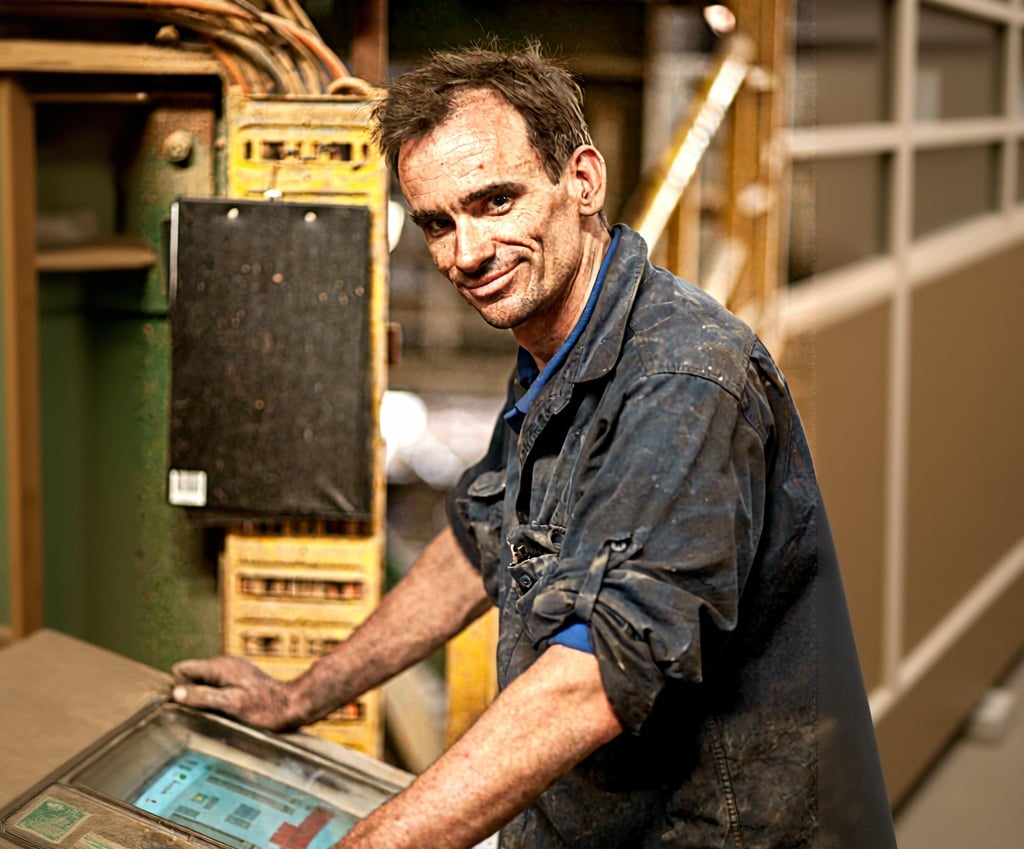
Image from Pexels- by Littlehampton Bricks
LET'S CONNECT
Newsletter
waleed.radwan@zedseven.org
+971-58822-4771
© 2024. All rights reserved.
JOIN the COMMUNITY
JOIN the MOVEMENT !